Comparing Mersey Sailing Clubs: Which One Fits Your Skill Level and Budget?
October 13, 2026 - River Life
The Liverpool Irish Festival arrives each autumn and, for a fortnight, the city leans a little further west than usual. Concerts, sessions, theatre, film and talks spill out across venues from the Phil to back rooms above pubs, and the whole thing can be wonderful or mildly exhausting depending on how you build it. Plan it badly and you'll spend Saturday evening in a queue for something that sold out a week ago while a great free talk happens two streets away. The fix isn't complicated: book your anchors early, keep the rest loose, and leave a gap for the session that runs long.
The programme runs over more than a week, so the first job is deciding which weekend you're actually claiming. Pick two or three ticketed events — a headline concert, a piece of theatre, a film screening — and build everything else around them.
A few things worth knowing before you start clicking:
There are broadly two kinds of Irish music night in this festival, and they ask different things of you. The first is the seated concert: a proper listening room, a headline act, maybe a support set that's worth arriving early for. The Phil is the obvious grand option, but smaller halls and church venues carry some of the best sets of the fortnight precisely because the room is quiet.
The second is the session — fiddles, whistle, bodhrán and a corner of a pub that gets louder as the night goes on. These are rarely ticketed and rarely advertised in the same way, which is exactly why they feel like a find. Ask at the bar, follow the festival's daily listings, and be prepared to move on if one pub is jammed.
If you want to talk, go to the session. If you want to listen, buy a ticket. Trying to do both at once never works.
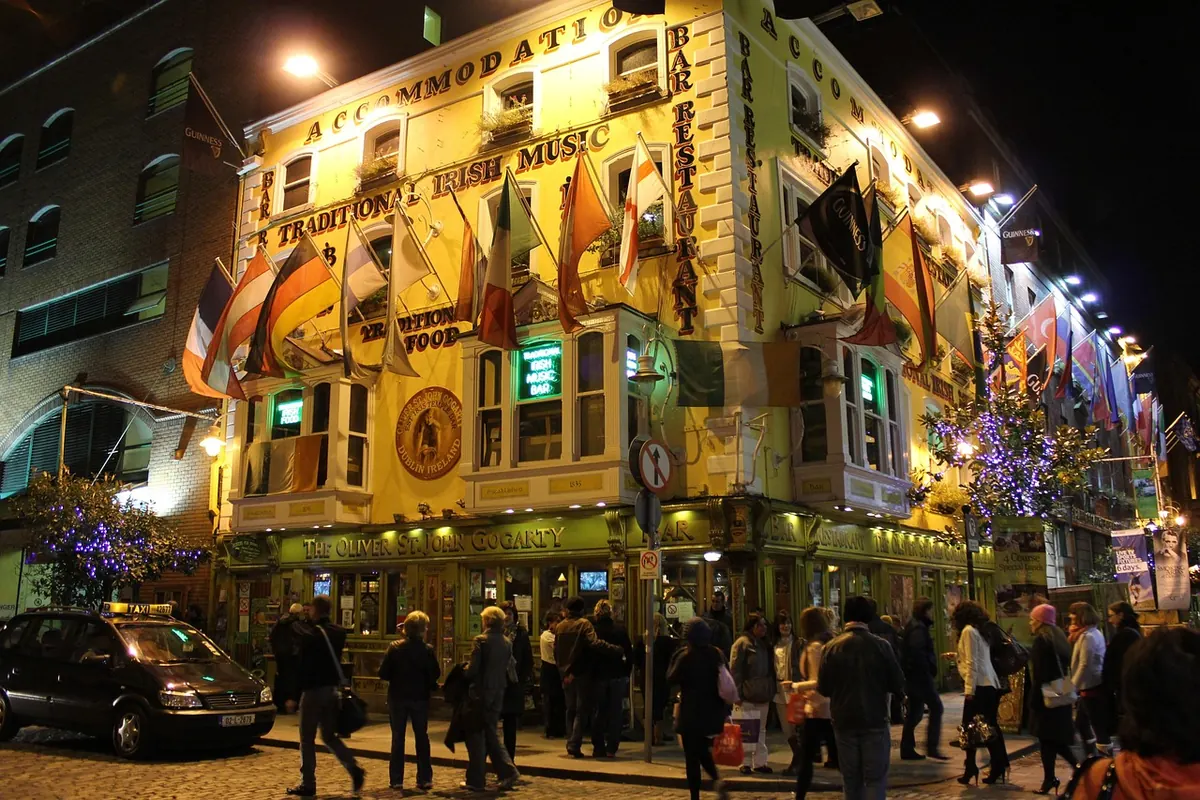
You don't need a guide to find a pint in Liverpool, but you do need one to find the right room on the right night. Long-standing Irish pubs around the city centre — Peter Kavanagh's on Egerton Street, Flanagan's Apple on Mathew Street, The Liffey on Renshaw Street, O'Neill's on Wood Street — all tend to draw festival traffic, and the atmosphere shifts depending on who's playing and who's watching the football.
Practical notes that save an evening:
The daytime programme is where the festival's quieter strength sits. Expect talks on Irish history, emigration and Liverpool's own connections, film screenings that rarely make it to the multiplexes, and literary events that mix new writing with older voices. A lot of it is free or cheap, and a lot of it happens in libraries, galleries and university buildings within a short walk of each other.
Walking tours are worth booking ahead. The story of Irish Liverpool runs through the north end of the city, around Scotland Road and the streets that grew up around the docks, and a good guide will tell it with names, dates and a bit of attitude. Wear proper shoes — the cobbles near the waterfront are unforgiving in the rain, and it will probably rain.
Not everything needs a ticket. Look for ceilidhs and family sessions where children are genuinely welcome rather than merely tolerated, craft and storytelling events in the libraries, and outdoor performances in the parks and squares. These are usually free, first-come-first-served, and busiest between late morning and mid afternoon.
Two tips. Arrive at the start rather than the middle, and check whether a "family" event is aimed at toddlers or at teenagers — the listings rarely spell it out. If you're bringing a buggy, city centre venues vary enormously for access, so ring ahead for the older buildings.
Programmes and line-ups shift, so treat any listing as a starting point and confirm the day before. Check the official festival programme for times, venues and whether an event is ticketed, and check the venue's own site too — that's where cancellations usually appear first.
One last thing: don't overschedule. The best part of the festival is usually the hour you didn't plan — the extra tune, the conversation at the bar, the detour to a second pub because someone knew where the music had moved to. Leave the space and it will fill itself.
Photo: Maguiss / Pixabay

From tide-dependent estuary berths to sheltered Wirral lake sailing, Merseyside's clubs differ sharply on cost,...
The Mersey Tunnels have linked Liverpool and Wirral since 1934. Here is how Queensway and Kingsway were built, and...
Copyright © 2026 The Mersey Corner. All Right Reserved.